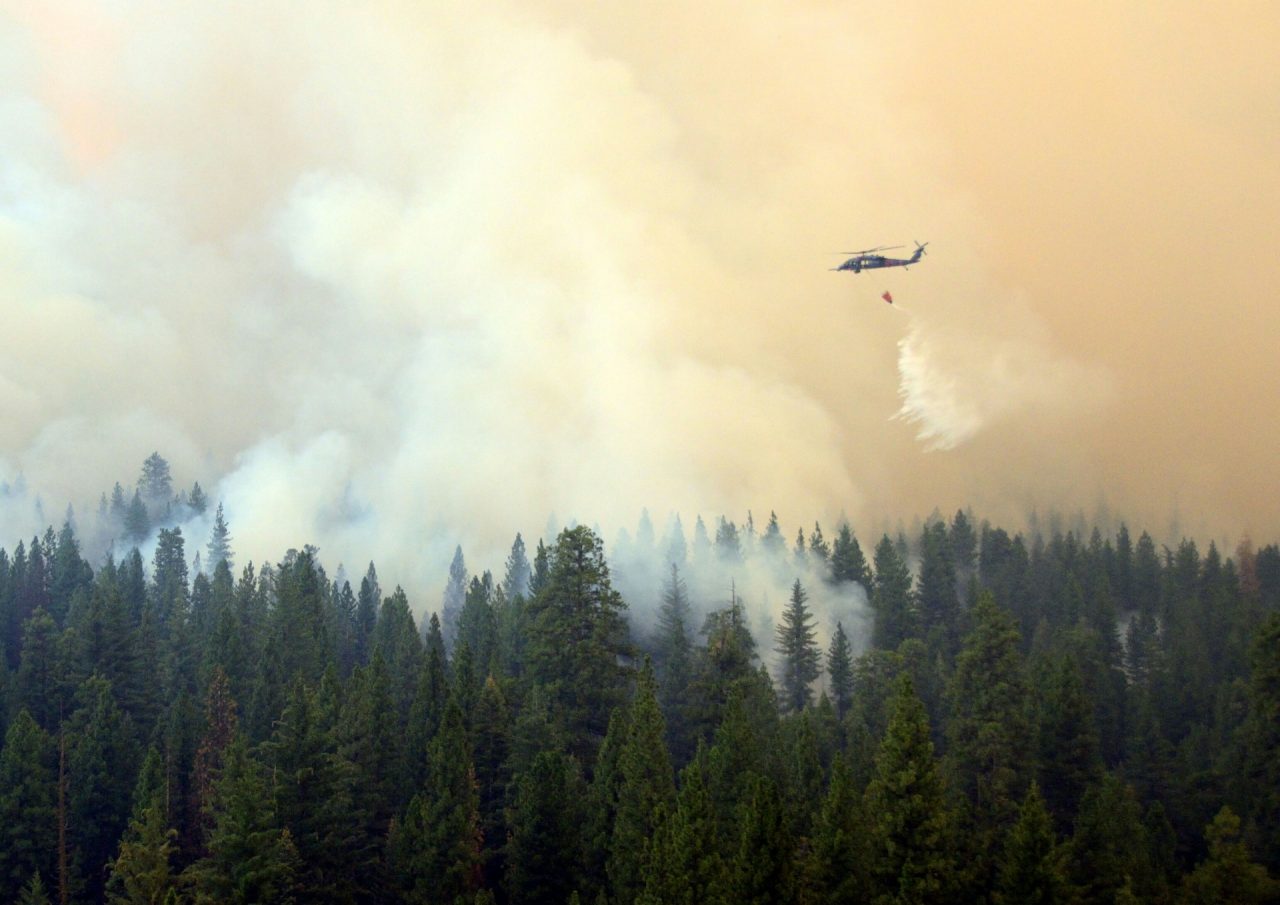
As wildfires become bigger and more frequent, generating smoke that can drift hundreds of miles, scientists are learning how breathing that smoke harms human health.
We know people exposed to a lot of wildfire smoke have higher risks for respiratory and cardiovascular problems and cancer. But the biological processes connecting the smoke to these diseases are not well understood, and affected communities are still adjusting to the reality of living with wildfires.
Recently, researchers at Stanford Medicine made some advances in learning how the immune system changes in response to wildfire smoke, Sharon Chinthrajah, MD, professor of medicine, said. Their work is the first step toward finding biomarkers that could signal when someone has had dangerous levels of smoke exposure and identifying drugs to stem the damage.
Chinthrajah is an expert in allergy and immunology and critical care medicine, and is the co- director of the Sean N. Parker Center for Allergy and Asthma Research at Stanford Medicine. We spoke with her about wildfire smoke and how it affects our physical and mental health.

How does wildfire smoke compare with other kinds of air pollution?
Wildfire smoke is especially toxic because it contains bits of whatever is burning. This includes a lot of vegetation, organic materials that generate lots of polycyclic aromatic hydrocarbons as they burn. Some PAHs are known carcinogens, for which intense exposures, or even periodic exposures over a lifetime, increase one’s cancer risk.
Wildfire smoke also contains biological particles such as pollen and mold spores — which cause seasonal allergies — because in hot, dry, windy conditions around a fire, pollen and mold can fly into the air and mix into the smoke.
In fires that reach inhabited or industrialized areas, many other things also burn: buildings and vehicles; concrete; metals, including toxic heavy metals such as mercury and cadmium; rubber; wires; large amounts of plastic. These materials get aerosolized and travel with the wind, sometimes very long distances. They break down into tiny particles, smaller than a strand of hair. These particles can make their way into our lungs and bloodstream.
Pollutants in smoke can also settle into the soil and be taken up by plants growing there. Long after a fire, we can be further exposed to heavy metals through the food chain.
The smoke also contains toxic gases, such as carbon monoxide and volatile organic compounds that contribute to air pollution. Nitrogen oxide is involved in forming more ozone, adding to greenhouse gases that trap heat in our atmosphere.
What are the biggest health concerns from wildfires and smoke exposure, and who is at greatest risk?
If you or your home are in the path of a wildfire, your first concern should be following evacuation orders. Get away if you need to.

People who don’t need to evacuate their homes, but are exposed to smoke, are at risk when the air quality is poor. If you see visible haze, that’s not a good sign.
Everyone in the San Francisco Bay Area has had that type of exposure. We’re all vulnerable, and our long-term exposure from repeated events adds up. Not only can smoke exposure add to lifetime cancer risk and pose hazards to our hearts and lungs, there is growing evidence — including from our new research — that it contributes to immune dysfunction.
Some populations are at extra risk: pregnant women, kids of any age, elderly folks, people who have respiratory or heart conditions, and people with allergies. Respiratory conditions such as asthma or COPD can be worsened by poor air quality, and smoky air can have high levels of pollen and other allergy triggers.

Kids are at risk because they have tiny little bodies, tiny little lungs, and they breathe faster than adults. Their lungs are their filters for what gets into the bloodstream. If they are exercising outdoors in smoky conditions, they are exposed to a lot of pollution for their body size.
How should we, individually and in our communities, reduce the risk of smoky days?
Everybody needs to be prepared for poor-air-quality days, whether they result from wildfires or are related to global warming. In homes, we recommend that you have highly rated filters in your air conduit systems, capable of capturing the tiny particles in the outdoor air that pose a health risk.
My Stanford Medicine colleague Lisa Patel, MD, is working on statewide policies to have similar air filters installed in California public schools. It’s a challenge because many schools were built so long ago that they lack modern heating, ventilation and air conditioning systems. We also increasingly need community locations where people can gather when their homes are not safe — libraries, community centers and so on — equipped with air conditioning for extreme heat and air filters for smoke.
We now have good guidelines on how to approach school activities such as recess, PE class and sports practices when air quality and temperature are hazardous, with specific advice about how long to stay outside, who should take extra precautions, and when to move indoors or cancel because of dangerous conditions. Kids may not recognize symptoms of heat exhaustion or heat stroke, and these tools can help them and their parents and coaches know when they shouldn’t go full steam ahead outside.
You are part of a team that recently published a study in Nature Medicine on immune impacts of wildfire smoke exposure. What is exciting about it?
We know that exposure to poor air quality shortens people’s lifespans. We have information about respiratory and cardiovascular risks. We know that wildfire smoke contains several what are known as Group 1 carcinogens, substances that scientific evidence shows can cause cancer, and that firefighters — with their high levels of smoke exposure — are at the highest risk.
But we don’t know how these problems happen; what amount of smoke exposure is enough to trigger them; or how we could intervene, perhaps with medication, to head off the negative consequences.
This study gives an early look into how the damage happens. We analyzed blood samples from 31 wildfire smoke-exposed people and 29 matched control individuals without smoke exposure and compared their immune cells in two unique ways.
We saw differences in their gene expression — which genes are turned on and off — in different parts of the immune system, including for inflammatory markers and immune signals known as cytokines, and in various immune cell populations.
We also looked, for the first time, at how heavy metals such as mercury and cadmium interact with immune cells. We saw, for instance, that mercury levels were higher in individual immune cells in smoke-exposed people and that these levels were linked to the person’s number of years of smoke exposure.
This work offers a unifying link to all the organ systems that we know are affected by smoke in real patients. The immune system is the common factor that’s involved in respiratory exacerbations, cardiovascular outcomes like heart attacks and strokes, and surveilling the body for cancer, for example. The specific immune changes we’re beginning to uncover might be good biomarkers for helping us classify someone’s risks after smoke exposure and may serve as targets for drugs to mitigate the harmful effects of wildfire smoke.
You also published a study this year in JAMA Network Open about mental health crises during wildfires. How do you untangle wildfires’ biological and emotional effects on mental health?
Our team’s study examined emergency care for mental health conditions during California’s severe 2020 wildfire season. We found that during the worst wildfire events, at times with the highest levels of tiny, potentially bioactive particulate matter in the air, there were more emergency department visits for certain mental health conditions, including depression and anxiety.
Is that a direct effect of smoke on patients’ brains, or are people feeling stressed because of the events surrounding a wildfire? It’s hard to dissociate the two. This work fits under the larger umbrella of research that some of my colleagues are conducting on toxic stress. We know that toxic stress in childhood changes adult immune responses, for instance. And we know that particulate matter — the particles small enough to be absorbed into the blood — can affect the brain, but the details need more investigation.
We need to know the long-term psychological impact of major climate events, because there is a mind-body connection and a mind-immune system connection.
Also, as physicians, we need to recognize the mental scars that people live with after severe climate events and give our patients proper tools to be resilient, feel a sense of control over their lives and move on in positive ways from those experiences.


- Insights
- 8
- 9
- 6
- 2
- 3
- 4
- 5