PARIS — L’Oréal is delving deeper into aesthetics with the acquisition of another 10 percent stake in Galderma Group AG, the pure-play dermatology leader worldwide that’s among the largest in injectable aesthetics.
That will raise L’Oréal’s share of Galderma, which it originally cofounded, to 20 percent.
The purchase is being made from a consortium led by EQT, including Sunshine SwissCo GmbH (SSCO), Abu Dhabi Investment Authority (ADIA) and Auba Investment Pte Ltd. — which all act in coordination as sellers — for an undisclosed amount.
Related Articles
“Aesthetics is a key adjacency to our core beauty business that we are keen to continue to explore,” Nicolas Hieronimus, L’Oréal chief executive officer, said in a statement released Monday. “Our initial strategic investment made in 2024 in Galderma has proven very successful, and therefore we are eager to solidify and extend the partnership further.”
Galderma CEO Flemming Ørnskov said in a separate statement: “Galderma continues to deliver impressive growth, strong innovation and category leadership across its broad, science-based dermatology portfolio. With strengthened commercial execution, continued platform and portfolio expansion and an increasingly consumer-focused approach to innovation, we are rapidly scaling into a dermatology powerhouse.
“We are pleased with L’Oréal’s increased investment, which affirms our direction and the meaningful value creation we expect in the years ahead,” he continued. “As we move into 2026, we remain fully focused on our Integrated Dermatology Strategy and on serving our customers, consumers and patients.”
At noon CET, L’Oréal stock was trading down 1.6 percent, while Galderma’s was up 2.8 percent.
The transaction will be implemented via an off-market block trade with the EQT-led consortium. The formerly concluded shareholder deal between L’Oréal and SSCO will dissolve once the transaction is complete.
L’Oréal is funding the deal with its available cash and credit lines. It is expected to close by first-quarter 2026.

The dermatological beauty market has been buoyant. The global injectable aesthetics market was valued at $9.45 billion in 2023 and is expected to reach $18.12 billion by 2032, representing a compound annual growth rate of 7.5 percent, according to Introspective Market Research.
L’Oréal said it will continue supporting Galderma’s strategy and independence under the leadership of Ørnskov.
The French beauty giant also said it is not contemplating increasing its stake in Galderma further.
However, analysts wonder whether other holdings of Galderma might remain of interest.
“We continue to see the possibility of L’Oréal gaining full control over the ex-Therapeutic Derm franchise once the full value of Nemluvio is clear, but this would likely take time,” wrote Jefferies equity analyst Benjamin Jackson in a note.
“We believe it is unlikely that L’Oréal will ultimately be interested in Galderma’s prescription drug business, and hence we have noted an increase in investor interest in the independent valuation of Nemluvio and the smaller legacy drug franchise,” Jackson continued.
L’Oréal and Galderma are to explore reinforcing their current scientific partnership.
Linked to L’Oréal’s increased stake, Galderma’s board of directors will consider naming two non-independent board candidates from L’Oréal. That would replace the EQT-led consortium, starting from the 2026 annual general meeting.
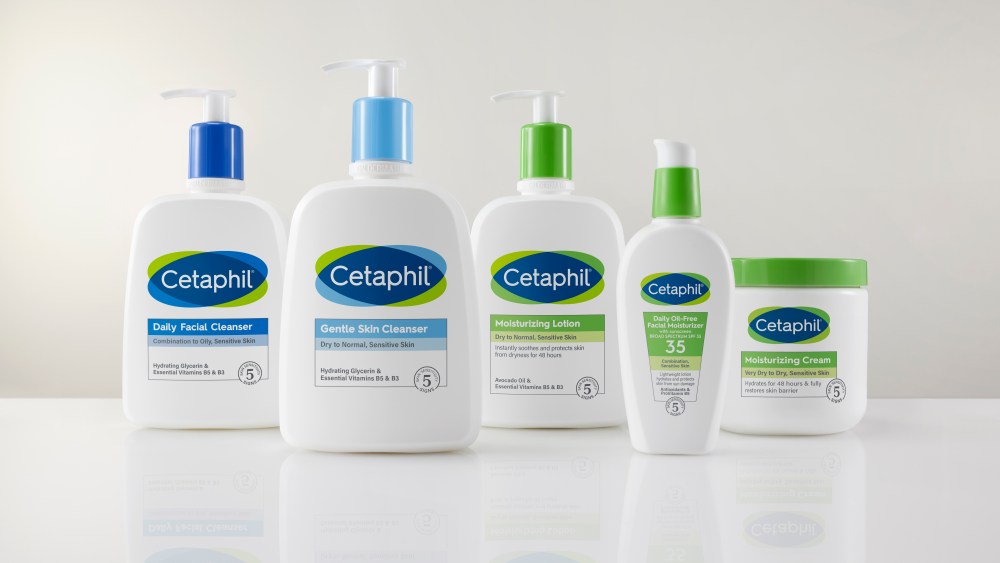
L’Oréal helped birth Zug, Switzerland-based Galderma, which was established in 1981 as a joint venture between L’Oréal and Nestlé. Galderma’s core brand, Cetaphil, dates back to 1947.
In 2014, Nestlé acquired L’Oréal’s 50 percent stake in Galderma. Five years later, EQT Partners investment group and a wholly owned subsidiary of the ADIA purchased the skin care company, then called Nestlé Skin Health, for an enterprise value of 10.2 billion Swiss francs. Afterward, the group was again rebranded as Galderma.
Galderma today is present in approximately 90 countries. Its brands include Actinica, Benzac, Azzalure, Differin and Dysport, offering a wide-ranging portfolio of dermocosmetics, dermatological drugs, hyaluronic acid fillers, neuromodulators and biostimulators.
Galderma floated on the SIX Swiss Exchange in Zurich on March 22, 2024, to great success, ending its first trading day up 20.75 percent. The implied placement value of up to 2.3 billion Swiss francs made Galderma’s the largest IPO placement volume in Switzerland since 2017.
Since its public offer, Galderma stock has risen 158.9 percent.
When L’Oréal’s initial 10 percent stake in Galderma was announced on Aug. 5, 2024, the companies said they’d agreed to a new strategic scientific partnership, which would leverage Galderma’s expertise across a wide range of dermatological solutions for injectable aesthetics and therapeutic dermatology, and L’Oréal’s know-how in skin biology, diagnostic tools and evaluation methods.
The partnership was also to help L’Oréal further explore the synergies between injectables and topical treatments. It has been focused on a diagnostic research project centered on a tool for product development that allows for the measurement of some impacts on various layers of skin.
Galderma and L’Oréal’s strengthening their ties again comes as they and the market have shape-shifted versus 11 years ago. Galderma has more than doubled in size, growing from a 1.6-billion-euro to a 4.4-billion-euro company in 2024.
Galderma has also changed from being a primarily therapeutic company to a pure-play dermatology concern, with most of its business stemming from both injectable aesthetics and dermatological skin care.
Simultaneously, the procedures market has increased more than sixfold.
In March 2023, L’Oréal announced the rebranding of its Active Cosmetics division to Dermatological Beauty. The move indicated L’Oréal wished to be the number-one partner to dermatologists worldwide.
L’Oréal’s Dermatological Beauty division, which includes brands such as CeraVe, La Roche-Posay, SkinCeuticals and Skinbetter Science, was the group’s second fastest-growing division in the first nine months of this year. In the period ended Sept. 30, Dermatological Beauty’s sales gained 3.4 percent on a like-for-like basis and 1.2 percent in reported terms to 5.47 billion euros.
The division’s strength heightened L’Oréal’s interest in the field of dermatological beauty.
At the time the initial 10 percent stake was taken, due to L’Oréal’s strong partnership with 200,000 dermatologists worldwide and Galderma’s transformation, Hieronimus said the investment was “very relevant today, when it was less strategic 10 years ago. Overall, we are very confident that this market will continue to grow.”
The news of L’Oréal’s increased stake in Galderma comes less than two months after L’Oréal said it would acquire Kering Beauty in a transaction valued at 4 billion euros.