Tessa Thompson, Nina Hoss interview: ‘Hedda’

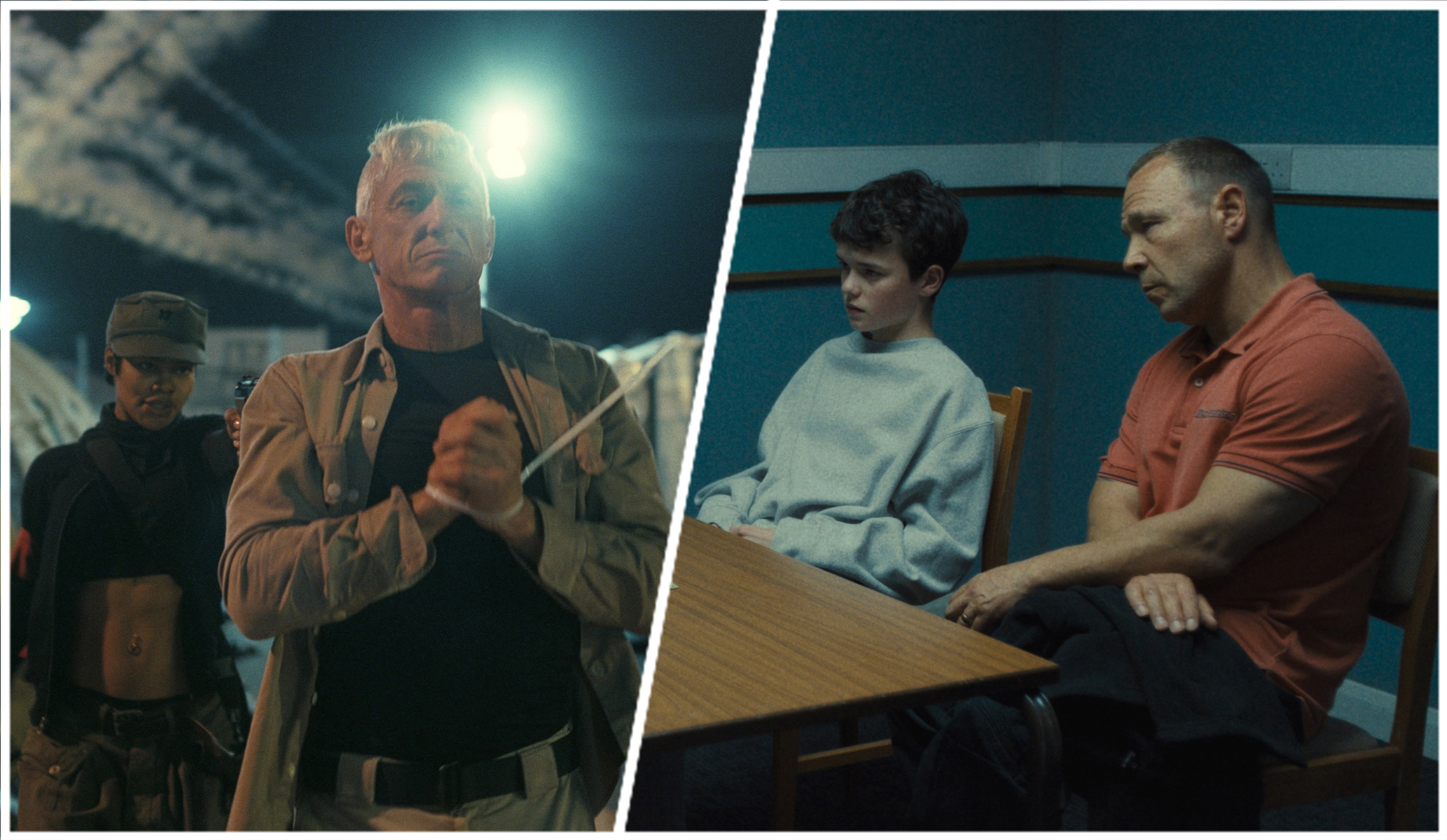
While it was director Nia DeCosta’s idea to reinvent Henrik Ibsen’s classic play Hedda Gabler, the film works because of the casting. The chemistry between Tessa Thompson as Hedda and Nina Hoss as the gender-flipped Eileen Lövborg is what sets the film alight — igniting long-simmering tensions between the ex-lovers, thrown back together for one unforgettable party.
The two actors reunited as part of Gold Derby's "Dream Team" series to talk about how they supported each on-screen and off to create those memorable performances. While Thompson had worked with DeCosta before on Little Woods, Hoss had plenty of experience in her own right having played Hedda onstage for each years. Watch the full interview above.

Gold Derby: What was your reaction when you first heard Nia’s idea about this new way of looking at Hedda?
Tessa Thompson: To be totally frank, I was like, "Why?" I thought, it's been done so many times before. It's such a storied character. I'm curious what the imperative is. And then Nia sent me the script, and I understood. It was exactly what I hoped for in the sense that I think when you do a classic, you have to implicate yourself and have some reason, some skin in the game, and take it apart and put it back together, especially these amazing classics that are so dexterous. So I just couldn't believe how much she had done that in spades. And it gave us the opportunity to get to find this extraordinary person to play Eileen Lövborg, because Eilert is fine in this play, but Nia had written this amazing character so I was going to have to this amazing costar.
Nina Hoss: I'm so lucky. When the script came and it said please read for Eileen Lövborg, I was like, "Oh my God, I see." It was just this incredible chance to revisit a material that I thought I never would dig my teeth in ever again. And to see it from a different perspective and to see what Tessa does with it. By watching Tessa and the bold decisions that she took for the character and stuck with it, the choices she made — I saw it in the same way, that [Hedda] is a performer in some way, because she doesn't want to get to her own self and her own truth. I think what our partnership was, even in a private way, that I wanted her to feel OK — as Nina but also as Eileen.
How did you get from the script to the screen? What was your rehearsal process like?
Thompson: Nia as a filmmaker just loves to have rehearsal in general. I think she tries to have it for all of her films, but in this one especially, it felt really important. So we got to rehearse together in the space and then also got to have so many conversations. I was worried. Because Nina played Hedda for six years and knew the play so, so well, it was really helpful to have someone who could talk through those things with me because as an actor, I can be very cerebral until I can sort it all out. Nina was very helpful and very generous with me in that period of going like, "Does this work, will this work?" The other thing that we spoke a lot about was trying to understand their relationship and the chronology of it and what had happened and what hadn't happened, because that isn't explicitly spoken about in the piece, necessarily. But we felt that for it to work, you had to have a real rich sense of their history and that you had to feel in both of our eyes when we look at each other, that we know exactly what went down and that we're two people that are still contending with the choices that we did or did not make during that time.
Hoss: Basically rehearsals are there so that you can get rid of your questions. You have so many questions going in and there's so many possibilities to see things in a certain way, and you will always have them. There's never the one answer, but there is maybe a direction we can agree on. Every word is meticulously placed and there for a reason. The dialogues are phenomenal, and there is always something unsaid underneath all of this. And so we could rely on that fact. "You could have shot me. And why didn't you?" So what on earth went down between those two? I won't reveal what we had what we thought. But it is kind of tricky. Hedda seems to be completely out of control and maybe mischievous and not at all the way women should be like motherly, warm, tending to each other. And Eileen loves it. There is a childlike lust for life, and that's why I can't let go of her. And it's just an underlying tension that's always there when the two are in the room.
There's something about these two women. They're like magnets that are drawn together. How did Nia guide you through that process? What did she tell you and what did she let you discover for yourselves as you were building these characters?
Thompson: She let us discover a lot. She doesn't get too mired. She's really specific about what's on the page, it really begins there for her. But then she also is really agile. And she also allows you your process in terms of what you need. I think we felt the very thing that you say, that they need to feel like they're characters that both have this magnetism, but they're also repellent, that there's something inside of them that feels there's this kind of toxicity, frankly. I think that is also a part of their fundamental tension, is that their philosophy about how to exist in that time as women are really at opposite ends of the spectrum and in opposition. And so I think that that is something kind of fundamentally that Nia lays out in the piece and exists between them, whether or not they're aware of that.
Hoss: That’s my experience as well. I thought her vision and her precision is in the script is in the right. It's kind of everything. And then we can take it and run with it and make it and fill it up and bring it to life. We would sometimes check in with her. But other than that, she literally gave us a lot of freedom to figure it out what was going on.
Thompson: And trusted us. Because actually, she and I fundamentally didn't see eye to eye on one thing, which is that I think initially she thought that maybe Hedda was planning a little more in advance, and my instinct is that she's acting more spontaneously and she's opportunistic and can be vampirically deciding, like, "Oh, here's my time to bite." But that it's quite impulsive, actually. And then she has to reckon with consequence. And she was sort of like, "OK, let's try that. Let’s see that as an organizing principle for character. And maybe that's interesting and maybe that's electric." And then we sort of followed that thread because it made sense to me. And it made sense thereby to us.
Can you share a moment on set or a scene that was particularly challenging for either of you or both of you, and how you helped each other through it?
Hoss: The scene in the bedroom because it is a scene that's so quiet. Because they don't allow themselves to actually say what they want to say to each other. And it's a long scene, and you have to hold the tension and then it ends in total disaster. Because they don't get to say what they actually want to say to each other. I found it challenging to hit every nuance, and to have to be on the same wave in that moment. The not so loud moments are sometimes more challenging.
Thompson: In these private moments, it's challenging for those characters to really sink in and be truly honest. So I think as an actor, holding that truth where there's this rich sense of emotional honesty, but maybe an inability entirely for your character to speak from that place. How you hold those two things in concert with each other and hold that balance, I think those probably were the the challenging moments.
What does it mean for both of you to get to play such rich, layered female characters?
Hoss: It is such a gift. Honestly, I feel like it's such a present given to me that in this Hedda Gabler, all of a sudden there's an Eileen that will be there forever and for others to have and to explore. It’s really rare that you have two female characters that are that rich and that you can see their path in such a nuanced way. The character starts as something and ends as something completely different, this whole goal and path get to there is so adventurous and crazy and vulnerable and bold and humorous and exciting. There is not often a character like that comes your way and that's for certain I would have never expected to find it in Hedda Gabler. That it works and that it doesn't take away from Hedda at all, it just makes it so much more exciting. That I found it blew my mind.
Thompson: It just enriches it for me that we get to take this canonical work and really center women inside of it. You get these three parallel portraits of attempts at personhood that I think is really exciting. And then just personally, to get to play this part. ... I started in the theater, all my early experiences were mostly in classical theater. And that began my love of storytelling. I count myself very lucky that I've gotten to make some of the work that I've gotten to make in the franchise space, but you start to get even further away from a kind of work. And so I think to be at this point in my career and get to take on this extraordinary part and to also feel like I get to return to the place or kind of work that really began my love for storytelling in the first place has felt really special. And unexpected and really tremendous and to get to do it with people that I just admire so much has been really such a gift.
I want to give you a chance to compliment each other. When was the moment you knew this was going to work?
Hoss: We went one evening back from the rehearsals and we were kind of not ready, so we had dinner at your place. We listened to music from the ‘50s and we told each other a little bit of our lives and just talked about these two characters, and there were moments where I thought, oh, Tessa has this immense openness and this mystery. You have that in life and you have that as Hedda. You think, "Oh, I’ve got her." And then you go, "Oh no, I don't."
And I thought, "This will be such a fascinating ride because I couldn't wait to see what Tessa does with this Hedda." The lady I thought I knew so well and that was really not at all let down. I was just so fascinated to see what kind of choices you took and that you were so bold, also in the vulnerability, but also in the precision, the way you held Hedda in the space and just how well you know how to work with the camera. It was really fascinating for me to see. And then just these moments where when you're together and something happens that is inexplicable and that you allow that to happen. That's what I'm in for, you know?
Thompson: I mean, there are so many moments, but I think that day that’s Eileen's entrance was your first day. And it was an interesting thing. It was like life imitating art, art imitating life. It's such a character entrance because Eileen is one of the first things you hear spoken in the piece. And the whole energy of my character changes when just the name is uttered. And then the whole beginning part of the film, everything is about Eileen in some ways. Everything. Hedda's walking around the house inspecting everyone's work, but I always thought she's inspecting it through Eileen's eyes in a way, which is to say, this woman is coming. What will she think about this place? And then I remember when Nina entered, there's a sense of energy because the movie works or doesn't work — it hinges on the energy between the characters. So there's also this feeling of the crew of like, "OK, here we go." Nina just walks in and I kid you not, she feels like a giant. What she's doing energetically, just the way she looks inside of that frame, but imagine in person, it's just so magnetic that she changed the energy of the room. It's like that thing that they always say on stage, if you're playing a king, for example, everyone else gives you your power. You can't act it. But Nina is so tremendously powerful as an actor that people can't help but the room changed. She really had that in spades. And so that was the first moment and she didn't even speak. And that was her first moment. I was like, well, this is going to work.
But there was one scene in particular where I said something to Nina that was not on the page. I had had this idea, and I didn't tell her that I was going to improvise, which normally I would do, and the way that she responds on camera, both as Nina and as Eileen, which is like, how dare you lady? This chemistry between these characters, they just prod at each other but delight each other. And this sense of collective mischief between these women and the fact that she didn't miss a beat, she just instantly is alive and responsive. I was like, I think this works.
This article and video are presented by Prime Video.